CADENA YOUTH CLUB RECEIVES FIRST AID TRAINING
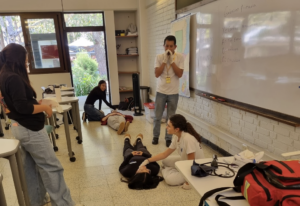
At CADENA JCG, we continue strengthening the newer generations through the American School’s CADENA Youth Club, which participated in a first aid training session led by Jorge Rodríguez, a Guatemalan Volunteer Firefighter. Throughout the session, students learned the first steps of emergency response, including the Heimlich Maneuver and basic techniques to treat fractures and control bleeding.
WE PROGRESSED IN STRENGTHENING THE DRF SYSTEM FOR DROUGHT RESPONSE
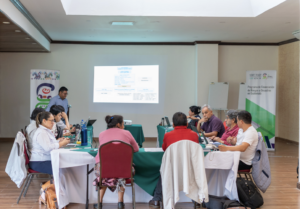
Within the framework of the Guatemala Disaster Risk Financing program and Start Ready’s Risk Pool 4, we gathered on March 5 to analyze progress and share experiences that strengthen action in the face of drought risk in the country. This space represented an opportunity to continue building coordinated and effective strategies focused on anticipating the impacts this threat generates in the most vulnerable communities.
Throughout the session, we presented the results of community consultations and contingency plans we developed in the Huehuetenango department, directly reflecting local needs and priorities. This information will be key to strengthening and scaling the DRF system, which will allow us to continue promoting anticipatory actions that protect lives and livelihoods in Guatemala.
WOMEN LEAD COMMUNITY DROUGHT PREPAREDNESS
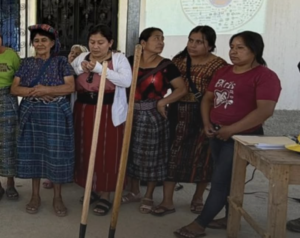
Together with Start Network, Hub Guatemala, ASEDE, and CARE Guatemala, we continue strengthening communities to face the effects of drought, a threat to crops, forested areas, and the livelihoods of a large number of families in the country.
As part of these efforts, we promoted the active participation of women in San Miguel Chicaj, who, on March 7, participated in emergency preparedness spaces, because their leadership is vital to building more resilient communities.
SACAPULAS STRENGTHENS ITS DROUGHT RESILIENCE
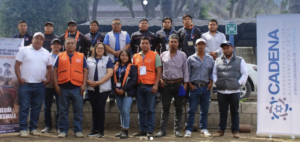
In the communities of El Jocote, Xecataloj, in Sacapulas, Quiche, we keep strengthening community preparedness in the face of the effects of drought, working hand in hand with local leaders to foster actions to anticipate this threat. Through training spaces and community dialogue, as part of our Anticipatory Actions for Drought Threat, we touched on topics such as water and sanitation, food security, and preventative measures.
These activities provided practical tools for families to protect their livelihoods, access to water, and strengthen their resilience in the face of climate change. Thanks to joint work with Start Network, Hub Guatemala, CARE y ASEDE, we continue to promote better prepared and safer communities in Sacapulas, Quiche.
VALLE VERDE CARRETERA SCHOOL JOINS THE 2026 CADENA INITIATIVE
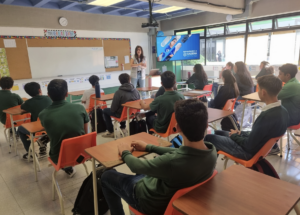
The Valle Verda Carretera School officially entered the 2026 CADENA Initiative program on March 23, joining the national network of educational institutions that strive to train young leaders who are committed to risk management, humanitarian action, and collective well-being. Throughout the presentation, we shared the program’s vision, formative stages, and past achievements with teachers and students, raising a positive response in the educational community.
The session included activities, an introduction to the focus on community resilience, and an invitation for each student to become an agent of change both within and outside of the classroom. With this incorporation, the school will begin to develop projects geared towards prevention, emergency preparedness, and the improvement of the local context.
WE STRENGTHENED OUR ANTICIPATORY ACTIONS CAPACITIES
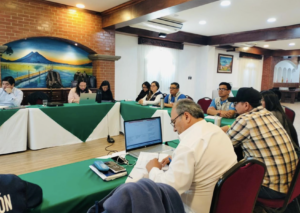
We took part in the Capacity Strengthening Workshop on Anticipatory Actions organized by the Guatemala Hub on March 23 and 24, an opportunity designed to further enhance our preparedness for risks and disasters. During these sessions, we shared our experiences alongside ASECSA-FUNDEBASE and CARE-ASEDE-CADENA, exchanging insights on the implementation of National Reserves and the activation of the DRF system.
In addition, we gained new knowledge about the Anticipatory Actions approach and how it differs from preparedness and emergency response efforts, highlighting the importance of acting ahead of time to protect lives and livelihoods.
ANALYSIS AND OPPORTUNITIES FORUM FOR HUMANITARIAN INNOVATION
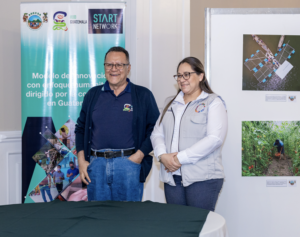
On March 25, as part of the Guatemala Hub, we participated in the Analysis and Opportunities Forum for Humanitarian Innovation based on localization in the face of climate uncertainty in Guatemala, promoted by Hub Guatemala and ASECSA.
This space allowed us to reflect and exchange knowledge and ideas on how to strengthen innovative humanitarian responses from the local level. This focus is related to our fieldwork that seeks to strengthen community capacities to improve preparedness and response before the impacts of the climate crisis.
COMMUNITIES STRENGTHEN THEIR WILDFIRE PREPAREDNESS IN BAJA VERAPAZ
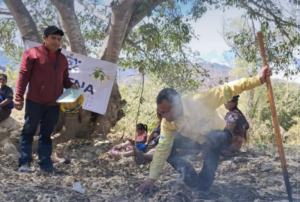
In the communities of San Miguel, Rincon San Pedro, and Los Hernandez, we keep driving actions to strengthen community wildfire preparedness. Through basic training sessions and the promotion of a culture of prevention as part of our Anticipatory Actions for Drought Threat project, we reinforce local knowledge and organization to enable timely responses to this risk.
In addition, through the provision of personal protective equipment, community brigades and local leaders now have more tools to safeguard their territories. Anticipating risk means protecting lives, forests, and livelihoods, and thanks to joint efforts with Start Network, Hub Guatemala, CARE Guatemala, and ASEDE, we continue building safer and more resilient communities in San Miguel Chicaj.
